Air Jordan 1: The Banned Shoe That Built a $50 Billion Empire
In 1985 the NBA fined Michael Jordan $5,000 every game he wore them. Nike paid every bill. By year one, the Air Jordan 1 had generated $126 million in revenue — and changed sneakers forever.
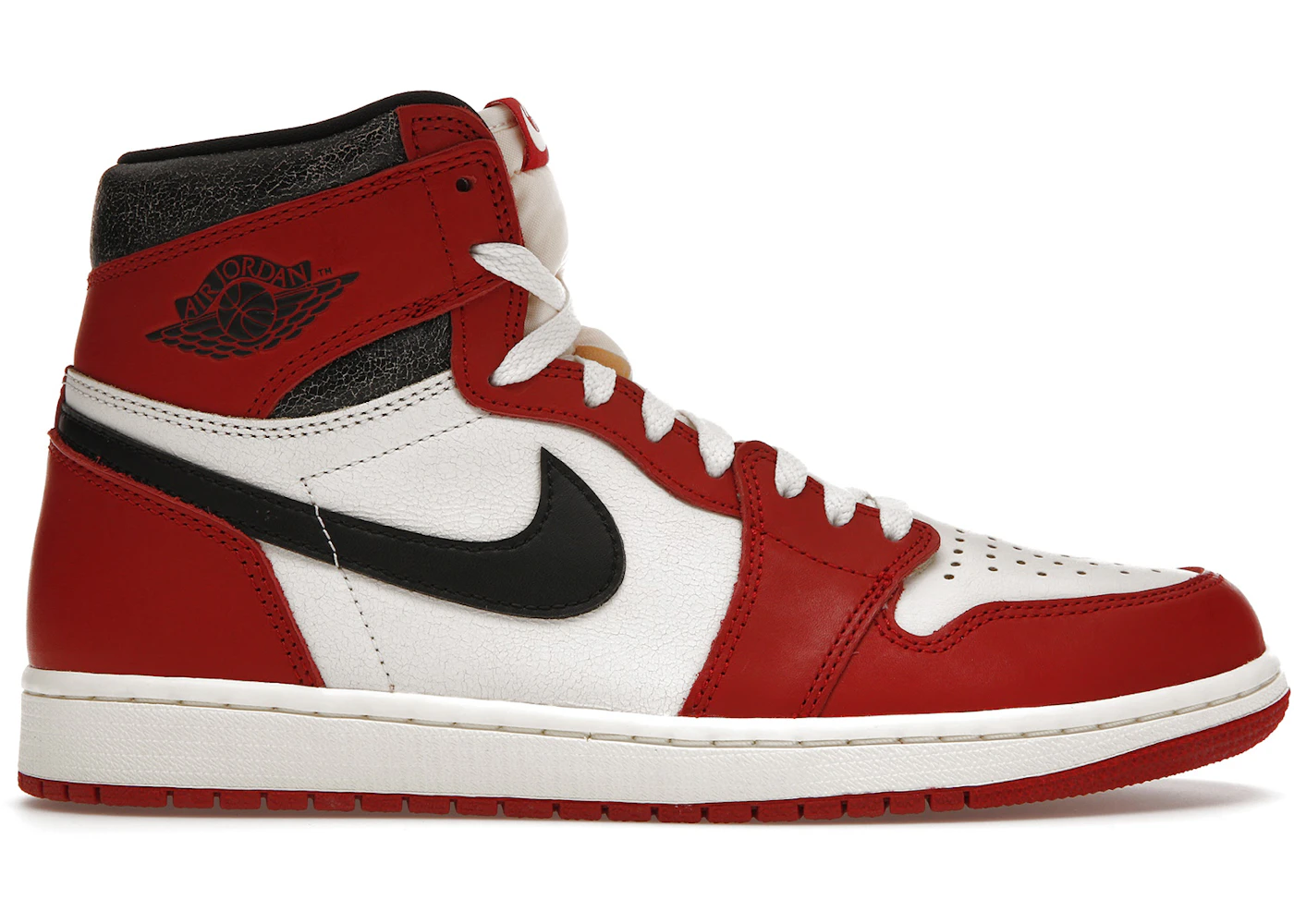
The shoe that built a $50 billion empire started with a fine. On April 1, 1985, Nike released a basketball shoe designed for a 22-year-old rookie from North Carolina. The NBA fined Michael Jordan $5,000 every time he wore it. Nike paid every bill. By the end of year one, the Air Jordan 1 had generated $126 million in revenue — 40 times what Nike projected.
Nothing in sneaker history has matched that launch. Not the hype cycles of the 2010s, not the StockX era, not the endless Supreme collabs. The Air Jordan 1 set the template for what a sneaker could be: a product, a statement, a story, and eventually a financial asset.
The Origin
In 1984, Nike was in trouble. The brand dominated running but was losing ground in basketball to Converse and Puma. Their solution was Michael Jordan, a player they almost didn't sign — Jordan's preference was Adidas. Nike's offer changed everything: a signature shoe line, royalties, and full creative control.
Nike's creative director Peter Moore designed the Air Jordan 1 in collaboration with Jordan and Nike Basketball. Moore drew from the existing Nike Dunk basketball silhouette but pushed the proportions and the color story harder. The result was a high-top with a thick, cupsole construction, Nike Air cushioning in the heel, and a leather upper that could take a colorway like a canvas.
The original colorways — Chicago (black/red/white), Royal (black/royal blue), Bred (black/red), and Shadow (black/medium grey) — were built around Jordan's team colors. The Chicago and Bred colorways violated the NBA's uniform policy, which required shoes to be at least 51% white. Jordan's shoes came in at roughly 23% white. The league issued a cease-and-desist on February 25, 1985, citing style code 4280.
Nike's marketing team reframed the fine as a feature. Their campaign — "The NBA won't let you wear them. Too bad." — ran in print and became the most effective sneaker ad in history. It wasn't just selling a shoe. It was selling rebellion, identity, and aspiration packaged in leather and foam.
The Turning Point
The shoe was banned before most people owned one. That scarcity, combined with the narrative Nike built around it, created demand the brand had never seen for a single product. The Air Jordan 1 sold out at retail and immediately appeared on resale markets — the informal ones of 1985, which meant school hallways, barbershops, and classified ads.
The second turning point came decades later. When Nike stopped retroing the AJ1 in the early 2000s, the original pairs from 1985 became grails. By 2015, a deadstock pair of the original Chicago colorway was selling for over $5,000. The 2015 retro release — using the original last and the correct "Nike Air" heel branding — pushed the cultural conversation back to the top.
The 2022 "Lost & Found" Chicago retro (officially: Air Jordan 1 Retro High OG Chicago Reimagined) was the most forensically accurate retro Nike had ever attempted. Worn-look yellowed midsoles, vintage tissue paper in the box, a replica hang tag. It retailed at $180, resold for $300-$350 at peak, and demonstrated that the AJ1 could carry a storytelling concept in the packaging alone.
Key Colorways and Collabs
| Colorway / Collab | Year | Retail | Resell Range (2025) |
|---|---|---|---|
| Chicago OG (1985 original) | 1985 | $65 | $15,000 – $30,000+ |
| Bred / Banned | 1985 (retro 2016, 2025) | $160 / $250 | $250 – $600 |
| Royal Blue | 1985 (retro 2017) | $160 | $300 – $500 |
| Shadow (2021) | 2021 | $170 | $180 – $250 |
| Off-White "Chicago" | 2017 | $190 | $1,500 – $3,500 |
| Off-White "Shattered Backboard" | 2017 | $190 | $800 – $1,800 |
| Travis Scott x Fragment | 2021 | $200 | $600 – $1,200 |
| Union LA "Storm Blue" | 2018 | $180 | $400 – $900 |
| Lost & Found Chicago | 2022 | $180 | $280 – $400 |
| Virgil Abloh Archive "Alaska" | 2026 | TBD | $600+ (pre-launch) |
The Virgil Abloh-era Off-White collabs deserve a separate paragraph. When Abloh reworked 10 Nike silhouettes for the "The Ten" collection in 2017, the Air Jordan 1 was the centrepiece. The deconstructed design — exposed foam, Helvetica text, zip ties, orange box branding — read as simultaneously unfinished and deliberate. The Chicago colorway released alongside six other AJ1 variants. Original retail pairs now trade above $2,000 consistently, with NDS pairs at the high end reaching $4,000+.
The Travis Scott x Fragment collab in 2021 pushed a different direction: military premium construction, reversed Swoosh on the left shoe, premium crinkled leather. It remains one of the few post-2020 AJ1 collabs that held resell value through 2025.
The Resell Market Today
The AJ1 resell market in 2025-2026 is maturing, not declining. The era of 100% margins on every retro is over — StockX data shows average profit margins on new Jordan releases have compressed to 10-25% for standard retros. But the polarization is increasing: clean GR (general release) retros like the Bred barely move above retail, while collab pairs and genuine OG grails continue appreciating.
Key market dynamics right now:
- Nike Air heel branding matters. Retros with the original "Nike Air" logo on the heel command a 40-60% premium over Jumpman-branded versions, all else equal.
- Condition premium is extreme. A DS (deadstock/unworn) OG Chicago commands 2-3x the price of a VNDS (very near deadstock) pair. The gap has widened since 2022 as condition-grading services like PSA and GOAT Auth became mainstream.
- The 1985 Heritage market is real. Game-worn AJ1s from the 1985-86 season are now investment-grade. A game-worn Chicago pair from the October 26, 1985 Pistons game sold for $205,188 at auction in 2025.
- 2026 outlook: Nike enters 2026 with renewed Jordan Brand momentum. The Banned Low OG is confirmed for Summer 2026. Expect tight supply, elevated resell.
What to Buy Now
1. Air Jordan 1 Retro High OG "Shadow 2.0" — The Shadow colorway (black/medium grey/white) is the AJ1's most versatile expression. The 2021 retro is currently trading at $180-230, near or slightly above retail. Clean everyday wear, appreciating slowly, zero cultural controversy.
2. Air Jordan 1 High '85 "Bred/Banned" (2025 retro) — Nike released the '85 last version in the Banned colorway in early 2025 at $250. Current resell sits at $280-320. The '85 last is objectively more accurate than the standard retro last, and this colorway is the story. Buy before the Low version drops and pulls attention.
3. Vintage Off-White Chicago (if budget allows) — At $2,000-3,500 for a clean DS pair, the Virgil Abloh AJ1 Chicago is not cheap. But it is the most culturally significant sneaker produced in the last decade, and it was designed by someone who died in 2021 leaving no further work. It is not getting cheaper.
The Air Jordan 1 is the only sneaker where the cultural narrative, the resell market, and the 40-year heritage all point in the same direction. Check live prices on snkrvalue.
Browse all Air Jordan 1 releases on snkrvalue.